
Every parent wants their child to have strong, healthy teeth. But getting children to brush, floss, and make good food choices is not always easy.
The good news is that you do not need a complicated routine. Simple habits at home can go a long way. When children learn how to look after their teeth from a young age, these habits for healthy teeth for kids can stay with them as they grow.
6 Simple Habits For Healthy Teeth for Kids
Helping your child build good dental habits does not have to be difficult. A few changes to their everyday routine can help keep their teeth and gums healthy. Here are seven habits that can make looking after their smile a little easier.
1. Make Brushing a Twice-Daily Habit
Brushing twice a day is one of the easiest ways to look after your child’s teeth. Make sure they brush in the morning and again before bed. Use a soft toothbrush and fluoride toothpaste that is suitable for your child’s age. Younger children may need your help because they often miss certain areas or do not brush for long enough.
Try to make brushing part of the normal morning and bedtime routine. You could brush your teeth at the same time as your child or let them choose their own toothbrush. Small things like these can make brushing more enjoyable. Brushing regularly is one of the best habits to start early for healthy teeth for kids.
2. Teach Them How to Brush Properly
Knowing when to brush is important, but knowing how to brush matters too. Show your child how to gently brush the front, back & chewing surfaces of their teeth. They should also brush along the gumline. Remind them not to scrub too hard as this can hurt their gums.
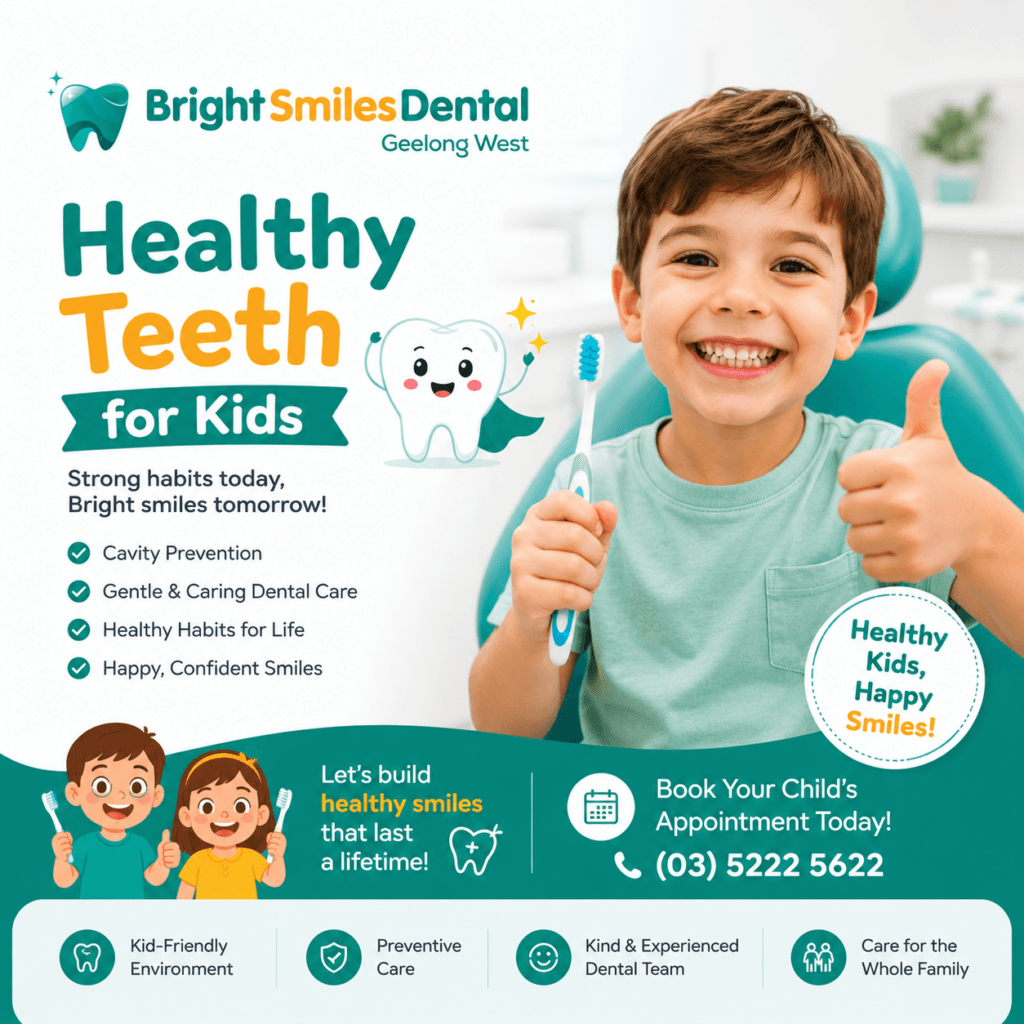
Young children often need help with brushing. You can brush their teeth first and then let them have a turn. As they get older, keep an eye on how they brush and help them improve their technique. It may take time for children to get it right. Be patient and keep reminding them.
3. Be Careful About Sugary Snacks and Drinks
Children love sweet treats and there is no need to ban them completely. The key is not to make sugary foods and drinks an everyday habit. Too much sugar can increase the risk of tooth decay. This includes sugar found in soft drinks, sweetened juices, lollies and some packaged snacks.
For everyday snacks, try options such as fresh fruit, vegetables, cheese or yoghurt. Water is also the best choice for keeping your child hydrated during the day. You do not have to make every meal perfect. Just aim for a good balance and try to keep sugary foods to a minimum. This can help protect healthy teeth for kids as they grow.
4. Start Flossing When Teeth Touch
Brushing does not clean every part of the mouth. Food & plaque can build up between teeth, where a toothbrush cannot reach properly. Once your child has teeth that touch each other, it is time to think about flossing. Younger children will usually need a parent to help them.
Flossing may feel strange at first, so give your child time to get used to it. If you are not sure when to start or how to floss your child’s teeth, ask your dentist to show you. Adding flossing to their routine now can make it easier for them to continue the habit as they get older.
5. Keep Dental Visits on the Calendar
A dental visit should not only happen when your child has a sore tooth. Regular check-ups allow the dentist to monitor your child’s teeth as they grow. They can identify early signs of tooth decay and talk to you about any concerns.
These visits also help children get used to going to the dentist. They may feel less nervous when dental appointments become a normal part of growing up. Regular check-ups are an important part of dental care for kids. They also give parents a chance to enquire about brushing, food, tooth development and other concerns.
6. Protect Their Teeth During Sport
Kids love being active, whether they play footy, hockey, basketball or another sport. But accidents can happen, especially during contact sports. A mouthguard can help protect your child’s teeth from injuries while they play. If your child plays a sport where there is a risk of a knock to the face, talk to your dentist about whether they should wear one.
A dentist can also help you choose a mouthguard that fits your child properly. It is a small step, but protecting their teeth during sport can prevent painful and expensive dental injuries.
What If Your Child Hates Brushing?
Some children simply do not like brushing. If this sounds familiar, you are not doing anything wrong. Try changing the routine instead of turning brushing into an argument every night. Let your child choose their toothbrush or toothpaste. Play their favourite song while they brush, or make up a simple game around brushing.
You can also brush your teeth together and show them what you are doing. If your child still refuses to brush or you are worried about their teeth, speak to your dentist. They may be able to suggest ways to make brushing easier for your child.
When Should Your Child See a Dentist?
Do not wait until your child has a toothache before booking a dental appointment. Some dental problems may not cause pain in the early stages. Regular visits give your dentist a chance to check your child’s teeth and gums and see how their teeth are developing. You can also get advice that is right for your child’s age and needs. If you notice a change in your child’s teeth, gums or eating habits, mention it to your dentist. Even if you are not sure whether something is a problem, it is better to ask.
Final Thoughts
Looking after your child’s teeth does not have to be complicated. Brushing twice a day, eating well, flossing, wearing a mouthguard during sport and visiting the dentist can all help. Your child will not learn every habit overnight. Give them time, help when they need it and keep encouraging them. With good habits at home and regular dental visits, you can give your child the best chance of keeping healthy teeth for kids as they grow.
At Geelong West Bright Smiles Dental, we want children to feel comfortable and confident when visiting the dentist. Our team provides gentle dental care for kids and can help you with your child’s changing dental needs. Get in touch with our friendly team if you have questions about your child’s teeth or dental routine.