
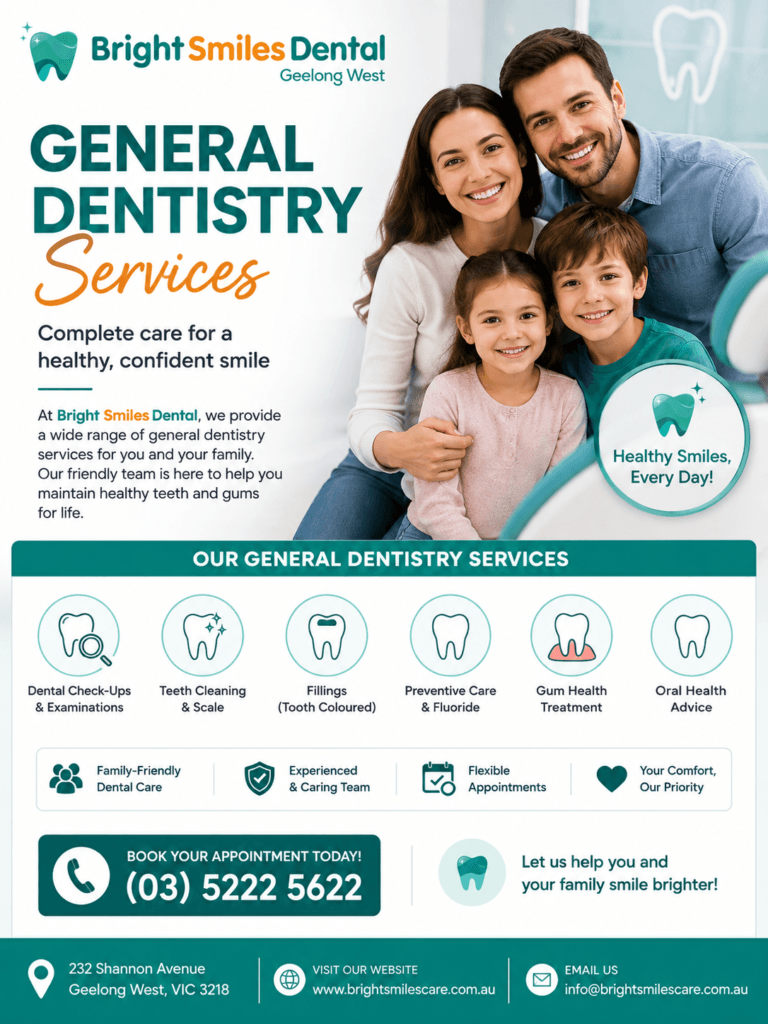
Brushing your teeth twice a day, which is obviously important, is not everything you should do to take care of your dental health. By undergoing regular dental work, you can catch problems early on. Knowing the general dentistry services that are available can help you feel more confident in understanding what care you may want and when to schedule an appointment. General dentistry includes many of the day-to-day services that make your oral health successful, from regular exams and cleanings to preventative care.
Whether you need a new dentist or want to learn more about your options, understanding what happens in general dentistry can help you make informed decisions about your oral health.
1. Comprehensive Dental Examinations
Regular oral care includes many levels of treatment. For example, dental examinations are one part that is important to ensure healthy teeth. A dentist will check your teeth, gums, bite, and complete oral health for problems.
Your dentist might check for cavities, gum disease, bitten or worn teeth, and infections. In addition, based on your needs, X-rays may also be suggested in order to detect conditions that are not visible during a visual inspection.
Routine checkups allow your dentist to map out potential problems before they become a big, more difficult-to-manage issue. Your dentist will also be able to talk about your brushing and flossing habits, while suggesting adjustments as necessary for better daily hygiene.
2. Professional Teeth Cleaning
Plaque and tartar can build up in tough places even with brushing and flossing regularly at home. These deposits are removed with professional teeth cleaning. This keeps your teeth and gums healthier.
A dentist or dental hygienist then usually cleans the teeth, removing plaque and hardened tartar before buffing the surfaces of each tooth. Another benefit is that the procedure can also help mask certain surface stains caused by foods and tobacco products.
How often you get professional cleanings will depend on your oral health and personal risk factors. Some may be better suited for appointments every six months, while others could be in need of talking to a dentist every couple of months.
3. Dental Fillings
Cavities are advanced decay of the tooth enamel caused by bacteria and plaque. If a cavity is found, your dentist might suggest that you have mercury in the dental fillings.
This means the dentist removes the part of the tooth that is damaged and cleans it up. A restorative material will then be added to return the tooth to its original shape and function.
Modern fillings, including composite resin and glass ionomer, offer tooth-colored materials that can look like the surrounding teeth. The material findings thus far mostly depend upon the location and condition of your tooth.
Catching cavities early can mitigate further damage and may even decrease the amount of major work done later. Hence, fillings still stand as a significant component of daily general dentistry practices.
4. Fluoride Treatments
Fluoride strengthens enamel and protects from decay. Fluoride also functions as an active ingredient in toothpaste and is sometimes added to drinking water. But for some patients, your dentist may recommend a professionally applied fluoride treatment.
Fluoride treatment is an effective and fast procedure that can be especially beneficial for patients at a higher risk of cavities.
Your dentist can assess your oral hygiene, diet, history of cavities, and enamel condition before suggesting any additional fluoride protection.
Along with general dentistry services intended to assist patients in retaining healthy teeth in between visits, these preventive treatments have frequently been offered.
5. Dental Sealants
Dental sealants are very thin sealants that protect those grooves and pits in the back-tooth surfaces. Many areas you cannot clean properly. By applying a sealant, you can create a smooth protective surface that helps keep these areas clean. Sealants are usually reserved for children and teenagers, but some adults may benefit from them as well.
Sealants act in conjunction with good oral hygiene and regular dental visits. If you or your child is susceptible to cavities in the premolar and molar teeth, ask your dentist if sealants could be appropriate. They are an optional precautionary step that’s commonly provided by most general dentistry services.
6. Gum Disease Treatment
Commonly, you can see red, swollen, or bleeding gums as a problem. If left untreated, the problem can turn severe. Your dentist may advise simpler home care or professional cleanings. They also offer deeper cleaning procedures to remove plaque and tartar below the gumline based on how severe your condition is.
Dental checkups can catch gum issues before they escalate. Your dentist can demonstrate ways to decrease plaque accumulation as well, such as by showing you appropriate brushing and flossing techniques.
Comprehensive general dentistry gum care is another aspect of dental care, with some people requiring more support than others to take away the pain they may be experiencing.
7. Dental Crowns
A dental crown aims to cover a tooth that has cracked, weakened, or otherwise suffered from damage. Crowns may be indicated when important structural damage is done to a tooth, following dental treatment if the constructed tooth needs support.
Crowns are made out of a variety of metals. Your dentist will take the placement, purpose, aesthetics, and health condition of the tooth into account when recommending an option.
Crowns can restore a tooth’s shape, size, and strength and improve its appearance.
In fact, your dentist should examine the tooth and then decide if a crown is appropriate since every treatment varies. Many dental practices offer crowns as part of their restorative general dentistry services.
8. Tooth Extractions
Most dentists prefer to save the natural tooth if they can. Sometimes, though, it is required for an extraction to be done if the tooth is extremely decayed, damaged, or causes issues with other teeth.
Your dentist will evaluate the tooth before suggesting an extraction and cover treatment options that are available. If such a tooth cannot be predictably restored, then removal may be advised.
Your dentist can tell you how to care for the area following an extraction and talk about replacement options whenever applicable.
Although they are generally not the preferred choice, extractions may occasionally be necessary to avoid further problems arising from a damaged tooth. As such, they might be included in the wider portfolio of general dentistry services offered to patients.
9. Root Canal Treatment
Decay or damage that extends into the soft tissue of a tooth can create severe pain or even infection. The root canal therapy carefully removes the infected tissue. It also cleans out the tooth’s inner side. Then, it seals it to maintain your natural tooth in place.
Modern root canal treatment is not supposed to be a painful experience. It can be performed under local anesthesia and is intended to solve problems associated with infection but without inflicting unnecessary pain.
Before recommending treatment, your dentist will assess your symptoms and the condition of the tooth. Root canal is also an important tooth-preserving treatment method in general dentistry services.
10. Emergency Dental Care
There might be times when we are facing some sort of dental problem. And it has nothing to do with your appointment at all. Needing to go in for an urgent appointment can include the following: a broken tooth, a bad toothache, dental injury, or sudden swelling.
Emergency dental treatment does more than provide relief for pain at that moment. It will assess the problem and decide what to do next. Treatment could include fixing a broken tooth, treating an infection, or referring you to a specialist depending on the case. If you have severe swelling that is impacting your breathing or swallowing, get emergency medical help.
Conclusion
General dentistry services include many of the essential treatments that keep you healthy between routine examinations: professional cleanings, fillings, gum care, crowns, and emergency treatment. Geelong West Bright Smiles Dental can offer you the best services you need.
As you reach the best general dentistry clinic, you get preventive care, regular checkups, thorough treatment options, and communication that is easy with a dental care team in whom you have complete confidence. It is suggested that regular professional care combined with good oral hygiene is an important part of oral hygiene.